California State Capitol at dusk behind a row of cars on a dealership lot

California dealers • Effective October 1, 2026

California Dealer
Laws Have Changed.

SB 766 — California's Combating Auto Retail Scams (CARS) Act — brings new requirements affecting vehicle pricing, add-ons, cancellation rights, communications and dealership records.

Educational information only. Not legal advice. Dealers should consult qualified counsel regarding their specific obligations.

What California Dealers Need to Know

Key changes under SB 766 that can affect your dealership.

01

Total Price Up Front

Advertisements that reference a specific vehicle or financing terms, and the first written communication with a consumer about a vehicle or financing (such as an email, text or quote), must clearly and conspicuously disclose the total price.

Dealer takeaway:

Make sure pricing communicated to customers follows the new total-price requirements.
02

Add-Ons Must Be Clearly Optional

Optional add-on products must be clearly disclosed as optional and agreed to before signing. Dealers may not charge for add-ons that provide no meaningful benefit to the consumer. Common optional products include:

  • Service contracts
  • GAP
  • Theft products
  • Protection products

Dealer takeaway:

Document what was offered, what it costs and what the customer agreed to.

03

Three-Day Cancellation Rights

The CARS Act replaces the prior contract cancellation option rules. Qualifying used-vehicle buyers may have a three-day right to cancel, subject to statutory conditions — including a vehicle price limit, mileage limits, vehicle condition and other requirements. Not every purchase qualifies.

Read California DMV Guidance
04

Keep the Record

SB 766 adds recordkeeping requirements for records related to covered transactions — such as advertisements, first written communications, pricing disclosures, add-on consents and cancellation-related documents.

2 YEARS

Certain SB 766 records must be retained for two years.

05

Misrepresentations & Transparency

The law prohibits misrepresenting material information involving areas such as:

  • Vehicle price or cost
  • Financing or lease terms
  • Availability at the advertised price
  • Add-on products
  • Trade-in or down-payment terms

Dealer takeaway:

Consistency between advertising, communications and the final transaction matters.

Document the vehicle

Protect the Vehicle
Before and After Delivery.

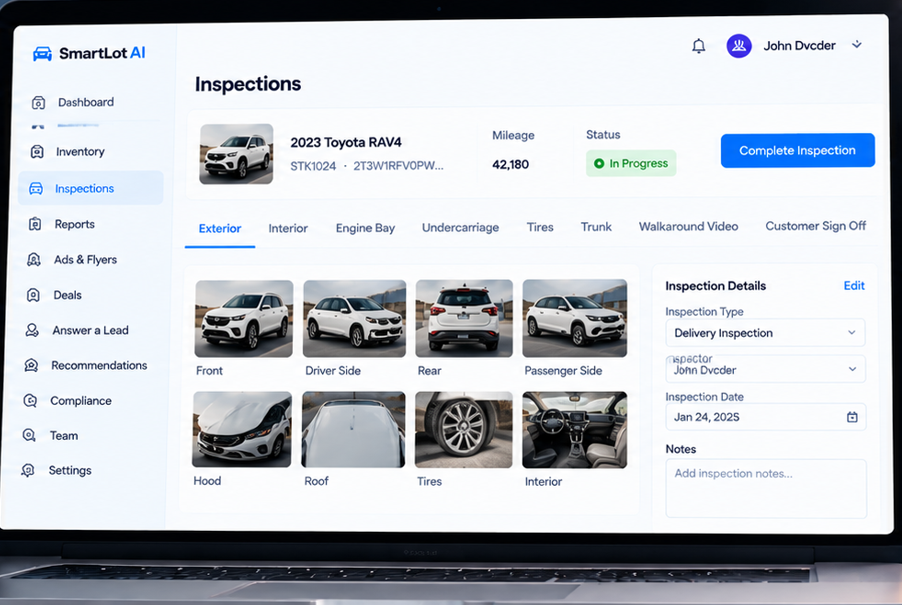
Pricing and paperwork are only part of protecting a dealership. A timestamped vehicle condition record can help document what the vehicle looked like at a specific point in the transaction.

Delivery Inspection

  • Required vehicle photos
  • Tires, engine bay, trunk/cargo
  • Odometer and damage notes
  • Walk-around video
  • Customer acknowledgment
  • Timestamps

Trade-In Inspection

  • Condition photos
  • Mileage
  • Damage
  • Vehicle identification
  • Timestamped records
  • Customer acknowledgment where applicable
See SmartLot Inspections

SmartLot inspections are a dealership documentation tool, not a legal requirement of SB 766.

SmartLot AI inspection screen with required vehicle photos (sample data)

SmartLot Inspections — sample data shown.

A Simple Workflow for Compliance and Documentation

From the first ad to long-term recordkeeping, keep your dealership process organized.

  1. Before the sale

    Advertise & Communicate Clearly

    • Total-price awareness
    • Consistent vehicle information
    • Documented customer communications
  2. During the sale

    Document the Transaction

    • Optional add-on disclosures
    • Pricing information
    • Applicable cancellation information
    • Vehicle condition documentation
  3. At delivery

    Document the Vehicle

    • Delivery condition
    • Mileage
    • Photos and video
    • Customer acknowledgment
  4. After the sale

    Keep the Record

    • Preserve applicable communications
    • Retain required records
    • Maintain accessible documentation

How SmartLot Helps

One Workspace. Better Documentation.

Vehicle Inspections

Create timestamped visual condition records.

Dealership Records

Keep important SmartLot-generated records organized by dealership and vehicle.

Inventory Intelligence

Work from actual dealership inventory when responding to customers.

California Dealer Education

Give your team quick access to current educational information and dealership guidance.

Is Your Dealership Ready?

A quick checklist to help your team prepare.

  • Review your advertising and total-price process
  • Review first written customer communications
  • Review optional add-on disclosures and consent
  • Review applicable cancellation procedures
  • Review record-retention procedures
  • Train sales and finance staff on the new requirements
  • Consider documenting vehicle condition at delivery
  • Consider documenting trade-ins when vehicles are left with the dealership

This is an educational checklist and is not an exhaustive legal compliance checklist.

Official California Resources

Get the latest information directly from the California DMV.

Dealership lot at dusk

New Rules. Better Records.
Smarter Dealership Tools.

See how SmartLot can help your dealership document vehicles, organize information and give your team one place to work.

This information is provided for educational purposes only and is not legal advice.